A Journey into the Profound Teachings of the Sage 💫
🌟 Greetings, Dear Readers! 🌟 Today, I invite you to embark on an enriching odyssey as we dive deep into the profound verses of the Ashtavakra Gita. 📜✨ This journey promises a captivating exploration of timeless wisdom, skillfully woven into the fabric of this ancient scripture.
🌿🔮Prepare to be spellbound by the enduring wisdom within the Ashtavakra Gita, guiding us towards spiritual revelation and inner transformation.
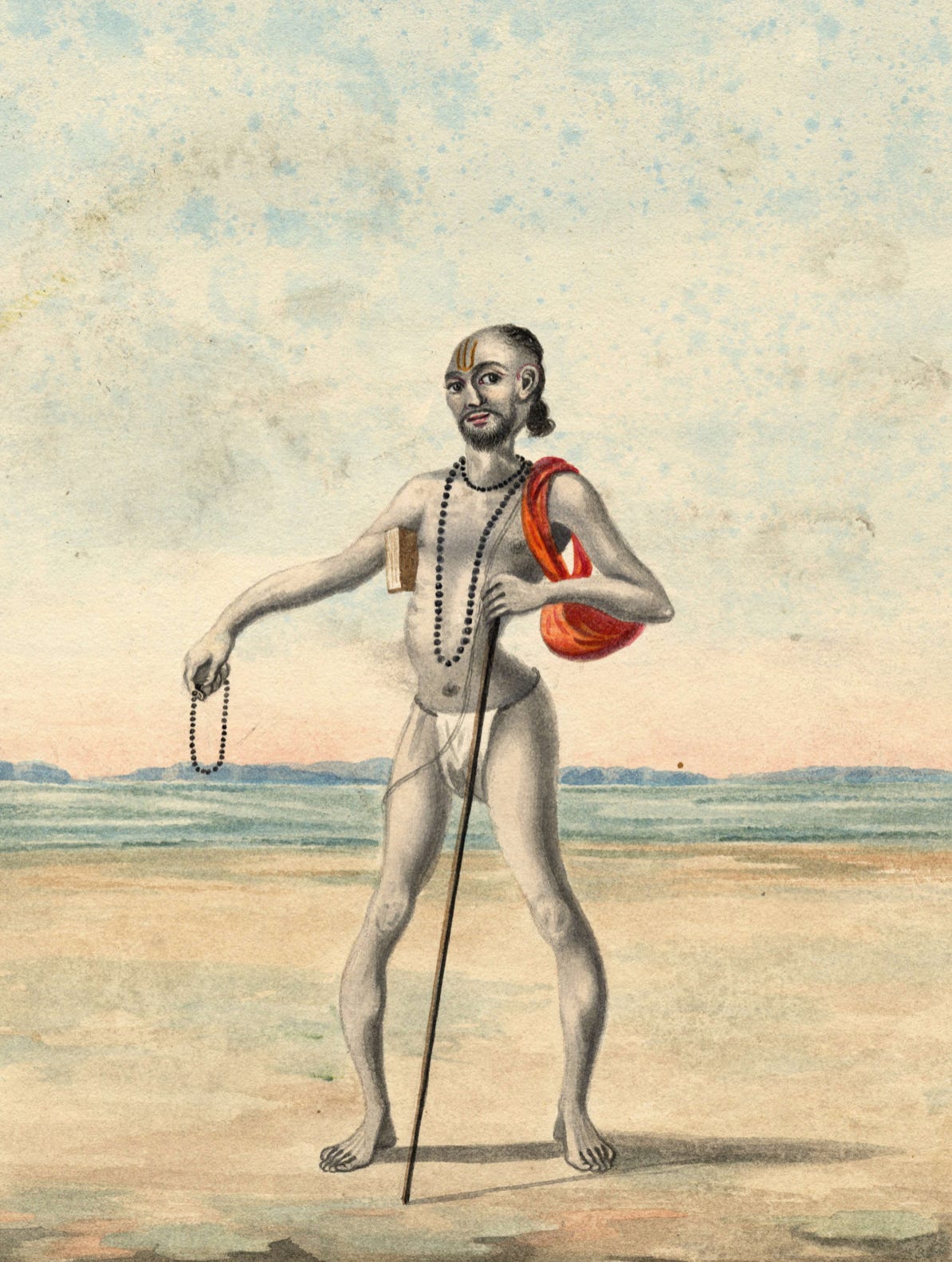
The wise see beyond good and evil and know that all is one. ― Ashṭāvakra
Ashṭāvakra: Unraveling the Mysteries of His Name and Birth
In the vast panorama of Indian spirituality, the narrative of Ashtavakra, the revered sage, unfurls like a tapestry of mystique and profound teachings. 🌄 While variations exist in the tales surrounding his origins, the essence remains constant—a sage born with eight crooked limbs, fittingly named Ashtavakra.
The crux of Ashtavakra's origin lies in the intriguing interplay between his parents, Sage Kahoda and Sujata. As the learned father Kahoda recited Vedic mantras, an astonishing event transpired. The fetus in Sujata's womb not only heard the sacred verses but responded with a proclamation that shook the foundations of his father's knowledge. 🤯 "The Vedic knowledge you possess is insufficient," declared the unborn Ashtavakra, pointing out the limitations in his father's recitation.
In a moment of paternal frustration, Kahoda, stirred by the audacity of his unborn son, uttered a curse. The consequence of this curse manifested in the form of Ashtavakra's birth—eight deformities, each a testament to the crookedness that echoed in his name. 👶🌀
“You do not consist of the elements - earth, water, fire, air or even ether. To be liberated, know yourself as consisting of consciousness, the witness of these.”
― Ashṭāvakra, Ashtavakra Gita
📜 What is a “Gita”? 🎶
The term "Gita," originating from Sanskrit, resonates with meanings like “song,” “singing,” “chanted,” or “praised in song.” In the vast tapestry of Indian literature, numerous gitas enrich the spiritual landscape, with the Bhagavad Gita, the "Song of God," standing prominently as The Gita.
Let's take a brief look at some notable Gitas:
🌌 Ashtavakra Gita: A philosophical scripture where the revered Sage Ashtavakra imparts profound wisdom to King Janaka, emphasizing the non-dual nature of reality.
🔱 Uddhava Gita: Nested within the Bhagavata Purana, this Gita unfolds as Lord Krishna imparts spiritual wisdom to his devoted follower Uddhava,covering diverse facets of life and devotion.
🌠 Rudra Gita: A celestial dialogue discovered in the Ramayana, featuring conversations between Lord Shiva and Goddess Parvati, delving into the nature of the self and the universe.
🌌 Vibhishana Gita: Also found in the Ramayana, this Gita is a discourse by Vibhishana, the brother of the demon king Ravana, shedding light on righteousness and devotion.
📚 Vyasa Gita: A dialogue between the esteemed Sage Vyasa and King Dhritarashtra in the Mahabharata, addressing the impermanence of life and the pursuit of spiritual knowledge.
💀 Yama Gita: Unveiling profound insights, this discourse by Lord Yama (the god of death) in the Puranas explores the nature of life, death, and the soul. 🌿
And in today's edition, our focus turns to the timeless wisdom encapsulated in the Ashtavakra Gita.
The mind is the cause of bondage and liberation. ― Ashṭāvakra
🌟 Unlocking Wisdom: Journey into the Ashtavakra Gita 🌟
The Ashtavakra Gita stands as a classical 🌌 Advaita Vedanta scripture,orchestrating a timeless dialogue between Sage Ashtavakra and King Janaka.Unlike the dramatic battlefield setting of the Bhagavad Gita, where ethical and moral dilemmas unfold for Arjuna, the Ashtavakra Gita takes us on a philosophical odyssey. 🤔
Here, the focus transcends mortal conflicts, centering instead on the profound exploration of 🌐 reality, the self (atman), and the sacred path to self-realization. 🚀 While the Bhagavad Gita wrestles with duty and righteousness amidst the clash of armies, the Ashtavakra Gita unveils the secrets of existence and the journey within. 🌿✨
Advaita Vedanta, a profound school within Hinduism, directs its gaze towards the sacred teachings of the Upanishads. 📚 With a special emphasis on the cosmic dance between 🌌 atman (the individual soul) and Brahman (the ultimate reality)
Advaita = Non-Duality
🌟 Key Points and Teachings from the Ashtavakra Gita 📜
Here are some profound insights and teachings from the Ashtavakra Gita, a spiritual scripture that delves into the highest truths of existence:
1. Profound Non-Dualism (Advaita):
The Ashtavakra Gita is steeped in the philosophy of Advaita Vedanta, emphasizing the non-dual nature of reality.
It teaches that the ultimate reality (Brahman) transcends all dualities, and the true self (atman) is not distinct from Brahman. 🌌🕉️
The Ashtavakra Gita is steeped in the philosophy of Advaita Vedanta, emphasizing the non-dual nature of reality.
It teaches that the ultimate reality (Brahman) transcends all dualities, and the true self (atman) is not distinct from Brahman. 🌌🕉️
2. Detachment and Equanimity:
Similar to other spiritual teachings, the Ashtavakra Gita underscores the importance of detachment from worldly attachments.
It advocates maintaining equanimity in the face of pleasure and pain, suggesting steadfastness irrespective of external circumstances. 🌬️🤝
Similar to other spiritual teachings, the Ashtavakra Gita underscores the importance of detachment from worldly attachments.
It advocates maintaining equanimity in the face of pleasure and pain, suggesting steadfastness irrespective of external circumstances. 🌬️🤝
3. Self-Realization:
The primary focus of the Ashtavakra Gita is on realizing one's true nature.
It teaches that the individual soul (jiva) is essentially identical to the universal self (Brahman), leading to liberation (moksha) upon recognizing this oneness. 🌿🌐
The primary focus of the Ashtavakra Gita is on realizing one's true nature.
It teaches that the individual soul (jiva) is essentially identical to the universal self (Brahman), leading to liberation (moksha) upon recognizing this oneness. 🌿🌐
4. Witness Consciousness:
The text introduces the concept of witness consciousness, urging individuals to be aware of thoughts, emotions, and experiences without becoming entangled in them.
This witnessing consciousness is considered a key aspect of self-realization. 👁️🧘♂️
The text introduces the concept of witness consciousness, urging individuals to be aware of thoughts, emotions, and experiences without becoming entangled in them.
This witnessing consciousness is considered a key aspect of self-realization. 👁️🧘♂️
5. Freedom from Bondage:
Ashtavakra guides King Janaka on attaining liberation by transcending identification with the body, mind, and ego.
Freedom from bondage is achieved by recognizing the illusory nature of the world and understanding one's true identity. 🔗🔓
Ashtavakra guides King Janaka on attaining liberation by transcending identification with the body, mind, and ego.
Freedom from bondage is achieved by recognizing the illusory nature of the world and understanding one's true identity. 🔗🔓
6. True Knowledge:
The Ashtavakra Gita places a strong emphasis on knowledge, not merely intellectual but as the direct realization of one's own nature as pure consciousness.
It transcends mere conceptual understanding, delving into the essence of true knowledge. 🧠🌟
The Ashtavakra Gita places a strong emphasis on knowledge, not merely intellectual but as the direct realization of one's own nature as pure consciousness.
It transcends mere conceptual understanding, delving into the essence of true knowledge. 🧠🌟
7. Spontaneity and Effortlessness:
The path to realization, as described in the Ashtavakra Gita, is characterized by spontaneity and effortlessness.
It is not about strenuous practices but recognizing and abiding by the natural state of one's being. 🌿🚀
The path to realization, as described in the Ashtavakra Gita, is characterized by spontaneity and effortlessness.
It is not about strenuous practices but recognizing and abiding by the natural state of one's being. 🌿🚀
The Ashtavakra Gita is regarded as a profound and advanced spiritual text, captivating those who seek the highest truths of existence. It challenges conventional notions of reality, encouraging the seeker to go beyond the limitations of the mind and intellect to directly experience the transcendent reality. 📖✨
Now, let's delve into the 20 chapters of the Ashtavakra Gita, each holding a unique facet of this transformative journey. 🚀
The Ashtavakra Gita, a timeless scripture with 20 profound chapters,
1. Saksi - Vision of the Self as the All-pervading Witness 👁️
Witness the revelation of the Self as an all-pervading observer, transcending time and space.
2. Ascaryam - Marvel of the Infinite Self Beyond Nature 🌌
Delve into the marvels of the infinite Self, surpassing the boundaries of the natural world.
3. Atmadvaita - Self in All and All in the Self 🔄
Discover the essence of non-duality, where the Self is in all, and all is in the Self.
4. Sarvamatma - Knower and the Non-knower of the Self 🧠
Explore the dichotomy between the knower and the non-knower of the Self.
5. Laya - Stages of Dissolution of Consciousness 🌀
Unveil the stages of consciousness dissolution, a transformative journey within.
6. Prakrteh Parah - Irrelevance of Dissolution of Consciousness 🌐
Contemplate the insignificance of consciousness dissolution in the grandeur of existence.
7. Santa - Tranquil and Boundless Ocean of the Self 🌊
Immerse yourself in the tranquil and boundless ocean of the Self.
8. Moksa - Bondage and Freedom 🗝️
Reflect on the intricate dance between bondage and the ultimate freedom.
9. Nirveda - Indifference 🤷♂️
Embrace indifference as a pathway to liberation from worldly attachments.
10. Vairagya - Dispassion 🧘♂️
Learn the art of dispassion, a key to detachment and spiritual growth.
11. Cidrupa - Self as Pure and Radiant Intelligence ✨
Acknowledge the Self as pure and radiant intelligence, beyond worldly impurities.
12. Svabhava - Ascent of Contemplation 🚀
Ascend through the realms of contemplation, understanding the nature of the Self.
13. Yathasukham - Transcendent Bliss 😌
Experience transcendent bliss, a state beyond the fleeting pleasures of the material world.
14. Isvara - Natural Dissolution of the Mind 🧘
Witness the natural dissolution of the mind, surrendering to the divine flow.
15. Tattvam - Unborn Self or Brahman 🕉️
Contemplate the nature of the unborn Self, the essence of Brahman.
16. Svasthya - Self-Abidance through Obliteration of the World 🌍
Discover self-abidance by obliterating the illusions of the external world.
17. Kaivalya - Absolute Aloneness of the Self 🌌
Explore the absolute aloneness of the Self, a profound state of spiritual independence.
18. Jivanmukti - Way and Goal of Natural Samadhi 🕊️
Learn about the way and goal of natural samadhi, the path to liberated living.
19. Svamahima - Majesty of the Self 👑
Marvel at the majesty of the Self, recognizing its divine grandeur.
20. Akincanabhava - Transcendence of the Self 🚀
Celebrate the transcendence of the Self, reaching a state beyond all limitations.
🌟 In Conclusion: A Grateful Farewell on the Path of Wisdom 🌌
As we conclude this enlightening voyage through the Ashtavakra Gita, I extend my heartfelt gratitude for accompanying us on this journey of profound insights and spiritual revelations. The Ashtavakra Gita, with its teachings on non-dualism, detachment, and self-realization, serves as a guiding light for those seeking the deeper truths of existence.
I, Vishal Rajput, express my sincere thanks for your time and attention to this edition. It is my hope that the wisdom shared here resonates within your heart and sparks contemplation on the path to self-discovery.
Thank you for being a part of this exploration, and may the wisdom of the Ashtavakra Gita continue to illuminate your spiritual journey.
With deep appreciation,
Vishal Rajput
Website - Agama Shakti
Newsletter - Agama's Message
🌐 Subscribe and Share for More Enlightening Journeys 🌟